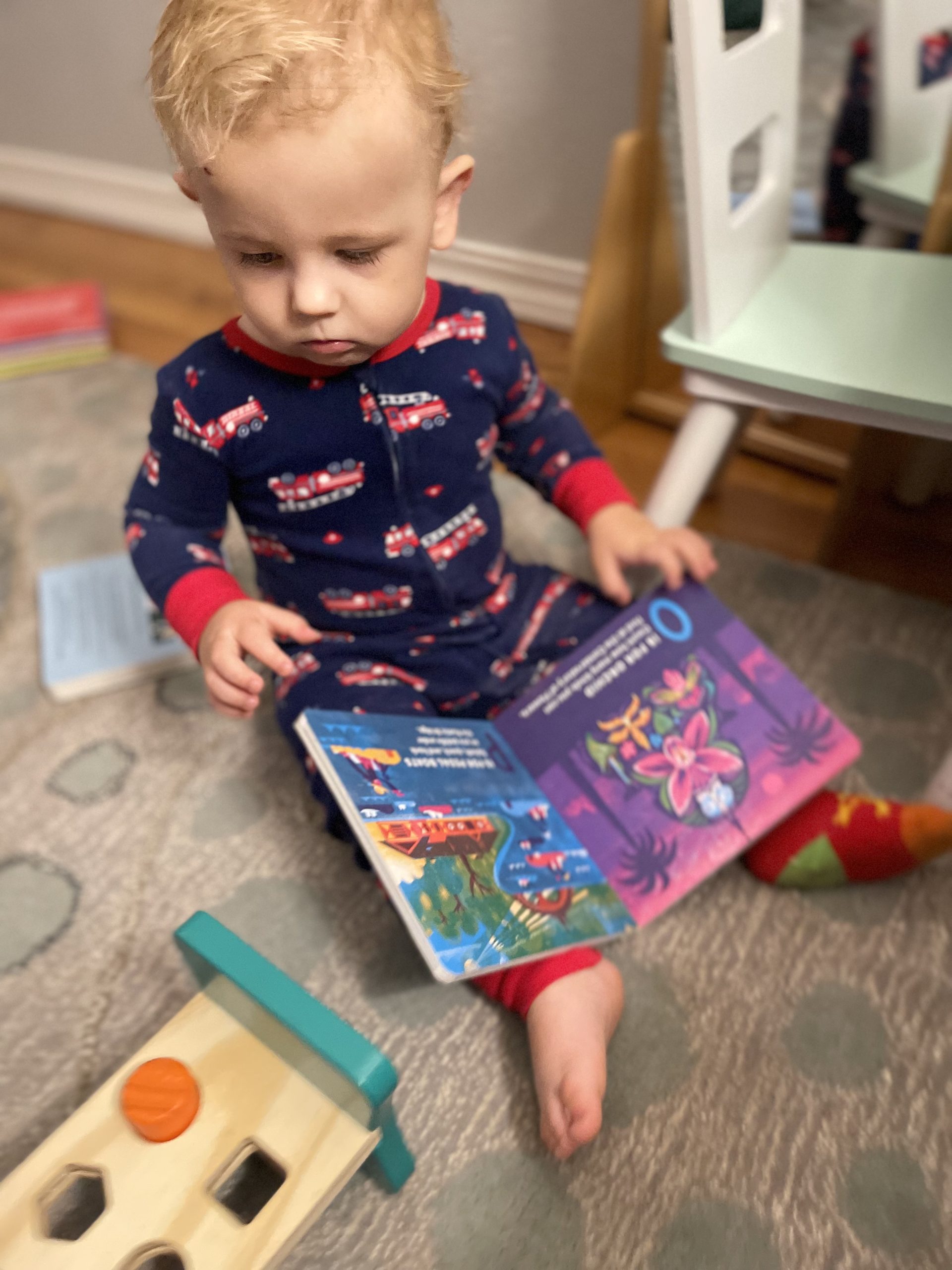
It is easy to get stressed when introducing books to a 1, 2 or 3-year-old. They throw, they chew, they push the pages around willy-nilly, they toddle off mid sentence. That’s all ok! When we let go of how reading “should” look like, reading with toddlers can be incredibly fun, rewarding, and low-pressure.
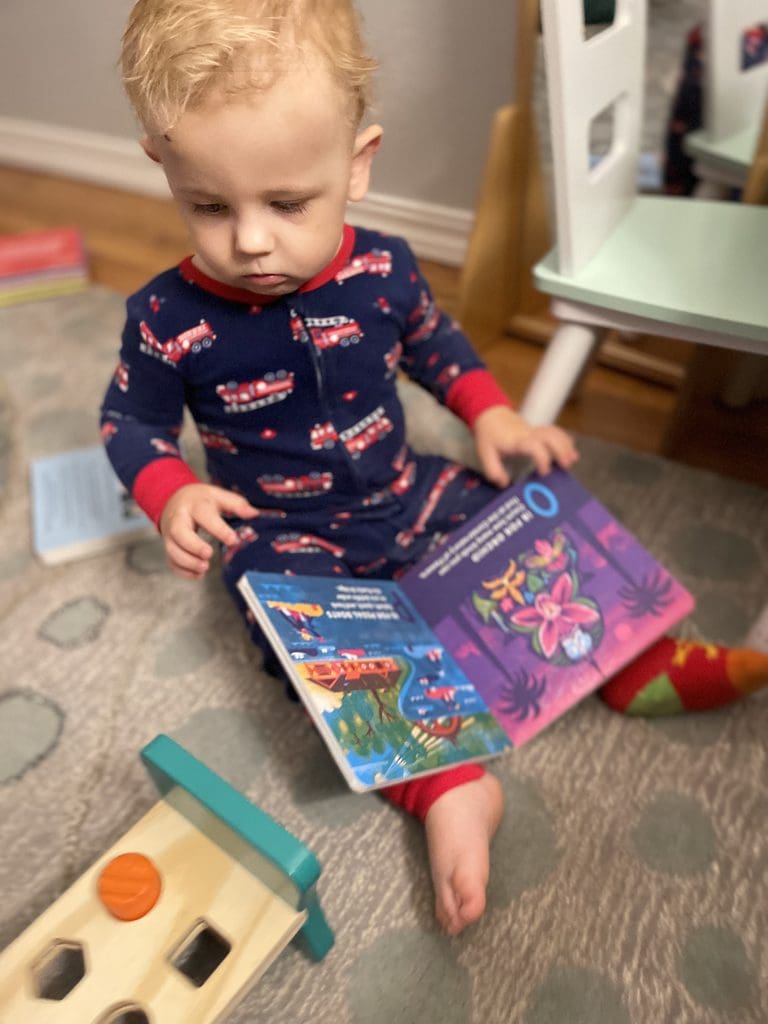
Here are a few of tips for making reading fun:
- Consider facing your child while reading. We often gravitate toward snuggling children in our laps while reading – keep doing that. But consider seeing what happens if you prop him up on your sofa and be part of the show. Make faces, make funny sounds, gesture wildly. Your child will love it, and look at the book occasionally too.
- Let them chew on the books. Exploring books this way is a sensory and literary milestone. That’s why board books are made the way they are. Just keep an eye out for any little-add on pieces that can end up in your child’s mouth.
- It’s ok to read the same book over, and over and over. And to flip to their favorite page again and again. Same with books, songs, etc. Young children and babies thrive on repetition. Adults not so much; when I am reading two pages of a book for the 100th time, sometimes I will switch it up and use funny voices to keep myself engaged.
- Your child tosses the book when she’s done? This is a great opportunity to catch it if you can, to model setting it down gently, and saying/signing “all done.” They will eventually stop, I promise.
- You don’t have to read the words. Your child can’t read! Enjoy this freedom while it lasts and run on vibes. You can make up your own words, use sound effects, or even flip through the book silently, pointing at the interesting pictures. Adjust what you do based on your child’s interests.
- Your child probably won’t start out reading an entire book. No problem. Start with what they can pay attention to, even if that is just one or two pages. Sustained attention takes time to build.
Literacy skills to build on in the early years:
- Pointing/gesturing to pictures.
- Commenting on pictures/stories using words or gestures.
- Holding books right side up.
- Flipping through pages one at a time with a little help if needed. This can be a hard task for ting fingers.
- Asking questions about the book. Watch your child closely: asking a question for a toddler may be as simple as touching a picture and possibly looking at you expectantly.
- Pretending to read a book. This may look like using recognizable words, exclamations, babble, or gestures.
- Answering simple “what” and “where” questions such as “what’s that?” and “where’s the cow?”
A few books that toddlers seem to love:
All of the Poke-A-Dot books by Melissa and Doug. Great for practicing how to point.
Indestructibles books – made especially for book-chewing babies
___ Are Not For Series (Hands Are Not For Hitting, Voices Are Not for Yelling, Waiting Is Not Forever, etc)

